Made real.

Our own products, client work, and the tools our factory runs on. Everything here was built through the factory, and agents write the code in all of it. Each one says where it stands today and how agents work on it.

Products we build and run

Our own products are where new methods get tried first.

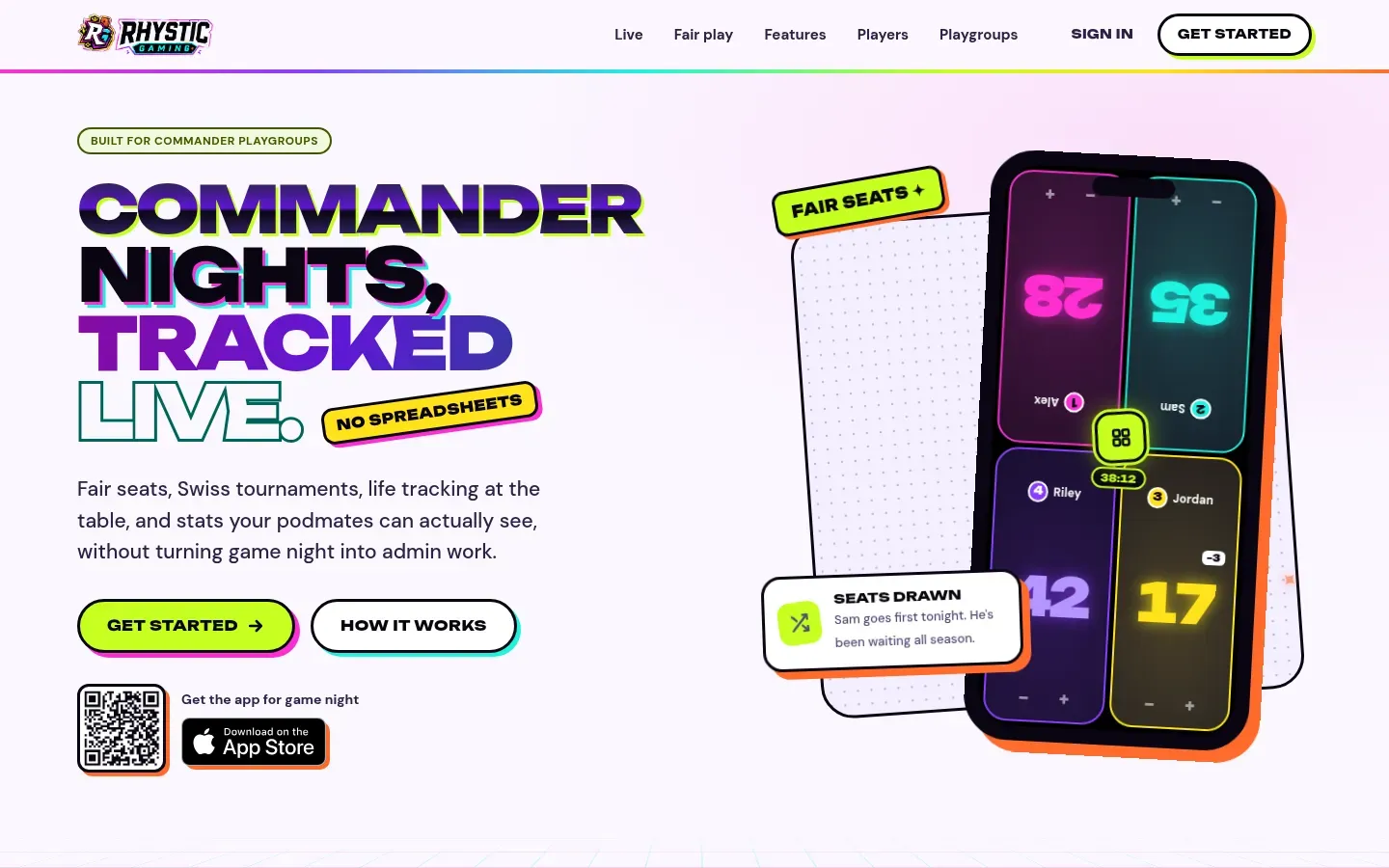
The Rhystic Play home page: “Commander nights, tracked live”, beside a phone showing four life totals.

Rhystic Gaming

Live

Three apps for Magic players

Three apps for Magic: The Gathering players, on one account. Rhystic Play runs game night: fair seats, Swiss tournaments, life tracking at the table, and stats the whole pod can see. Rhystic Collect scans your cards into a collection you can search on the web. Rhystic Fan turns the Pro Tour into fantasy.

Ours from end to end, self-hosted, through our own forge and CI, in one repository for all three apps.

Rhystic Collect went from first spec to a usable product in under a week.

How agents work on it

  • Agents run the same checks as CI on the API, the web app and the mobile app before a change merges. Deploys run only from main.
  • After a deploy, an agent signs in to production as a dedicated test user with a one-time session, and only looks.
  • In the product: the weekly recap is drafted with Gemini.
rhysticgaming.com

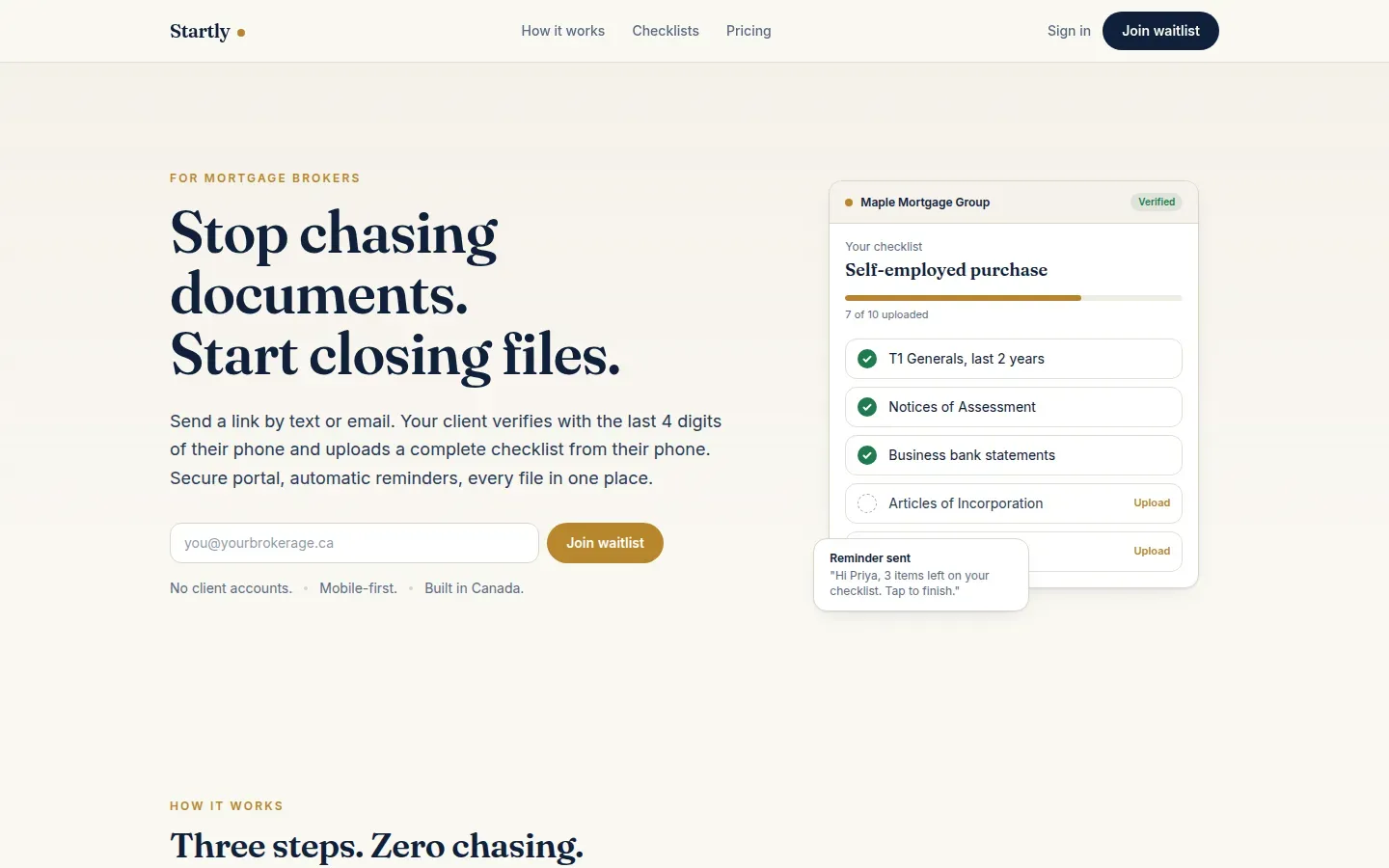
The Startly home page: “Stop chasing documents. Start closing files.”, beside a sample checklist, seven of ten uploaded.

Startly

Live Built with a partner

Document collection for mortgage brokers

Document collection for mortgage brokers. The broker sends a link by text or email, and the client uploads a full checklist from their phone.

We built it with a partner, on Google Cloud.

From first spec to a usable product in under a week.

How agents work on it

  • Agents claim an issue, work in a draft pull request, and hand it to a review agent before it is ready.
  • Agents cannot read secrets, migrate a remote database or force-push.
  • A weekly agent routine reviews the code and opens pull requests. It never pushes to a release branch.
  • In the product: email replies are sorted by Gemini, switched off until it scores against an eval baseline.

startly.io

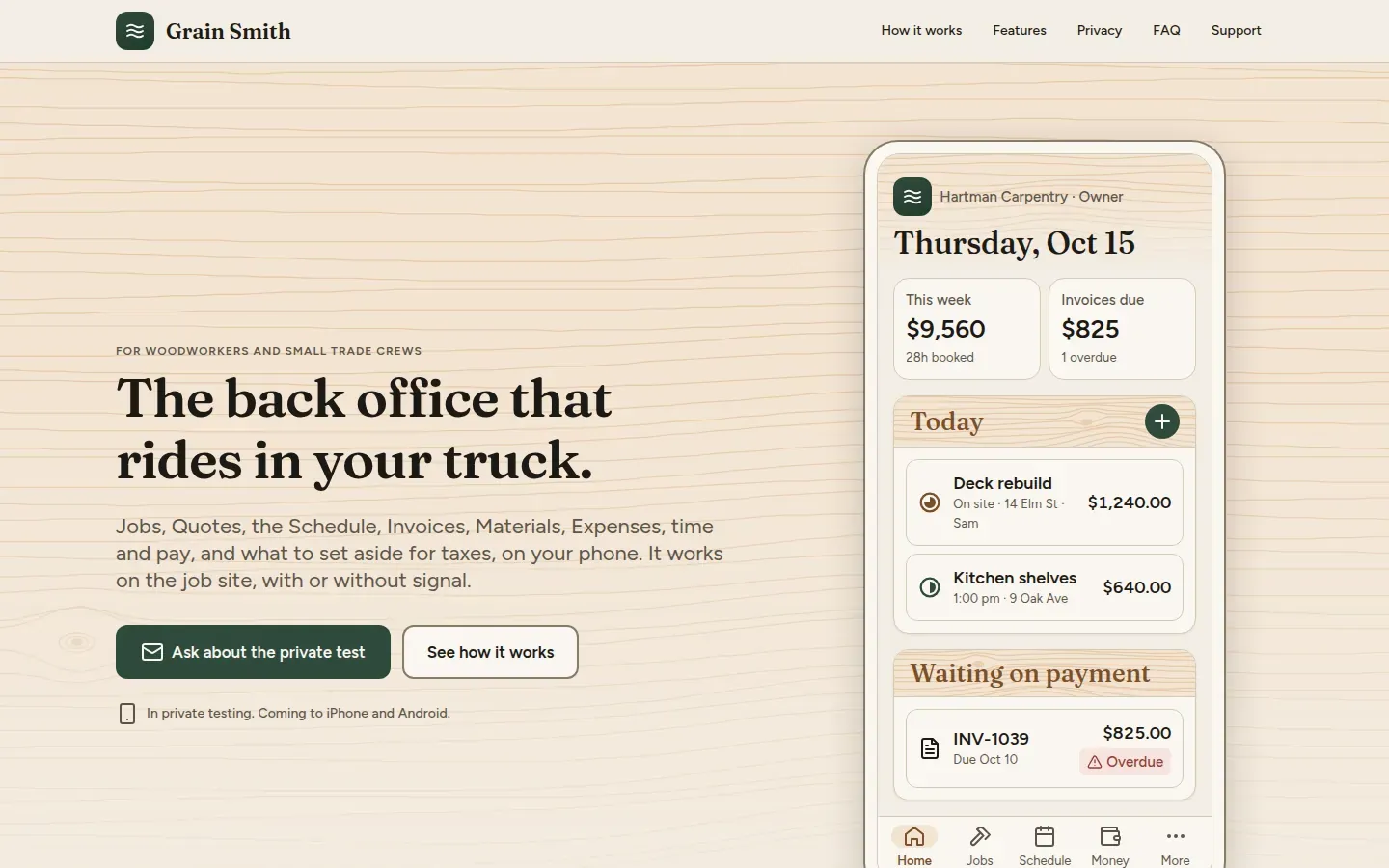
The Grain Smith landing page: “The back office that rides in your truck.”, beside a phone showing the day’s jobs and an overdue invoice.

Grain Smith

In development

A back office for tradespeople

The back office that rides in your truck: jobs, quotes, the schedule, invoices, expenses and what to set aside for taxes, for woodworkers and small trade crews. It works on the job site, with or without signal.

Ours. In private testing, coming to iPhone and Android; the site is not live yet.

From first spec to a usable product in under a week. It is in testing now.

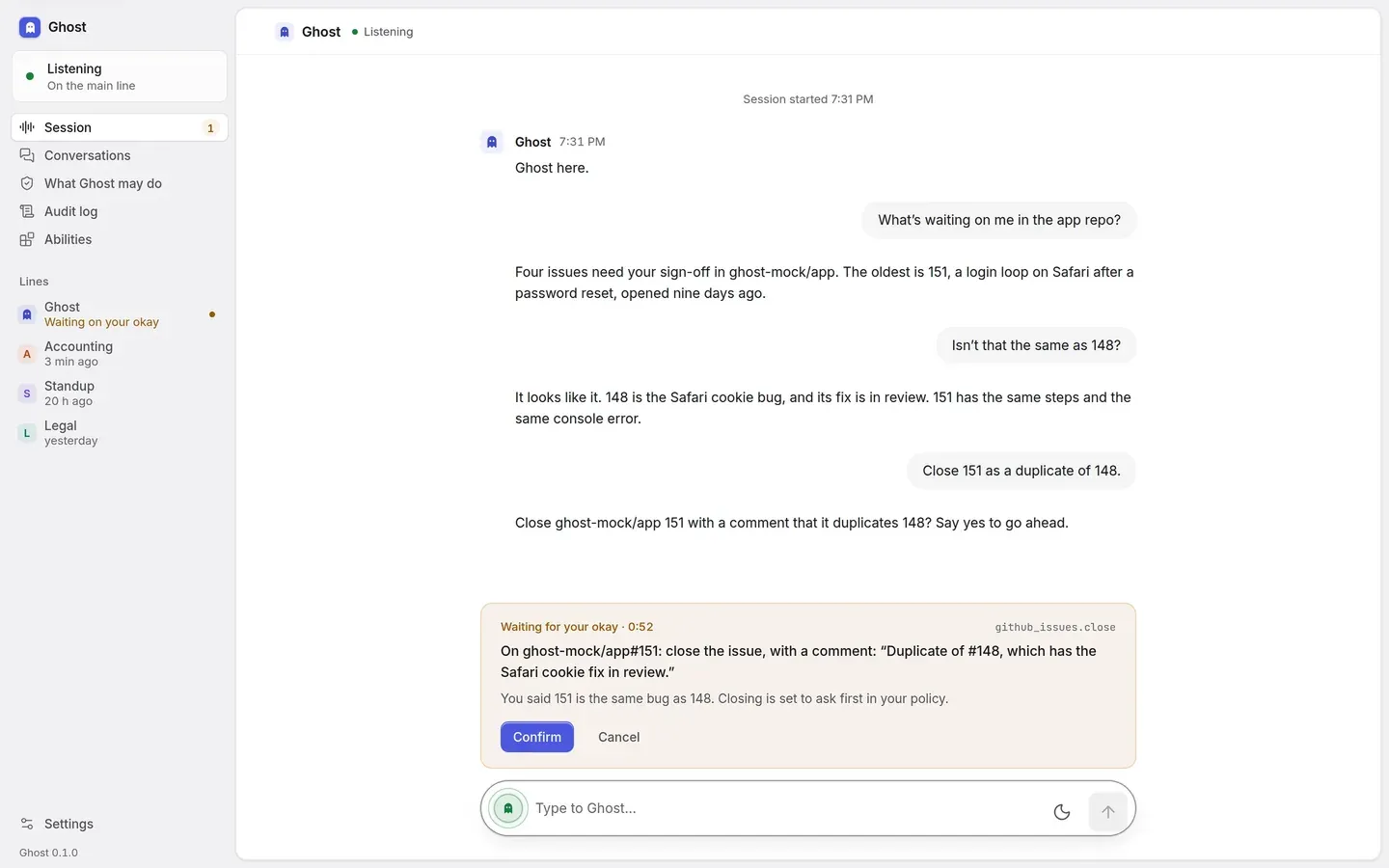
The Ghost desktop app in a session: the conversation, and a change waiting for your okay with Confirm and Cancel.

Ghost

Early

GitHub triage by voice

Voice-first GitHub issue triage. Say “hey Ghost”, ask what needs your sign-off, talk it through, and approve or request changes without opening the tracker. “Undo that” takes back the last change.

Ours, open source under the MIT license, on your own Linux machine.

How agents work on it

  • Ghost is itself an agent: Claude, with the wake word, speech-to-text and text-to-speech running locally.
  • It has no tool that writes to GitHub on its own. The desktop app asks before any change you have not allowed.
  • Issue text is treated as untrusted data, never as instructions.

github.com/heka-vault/ghost

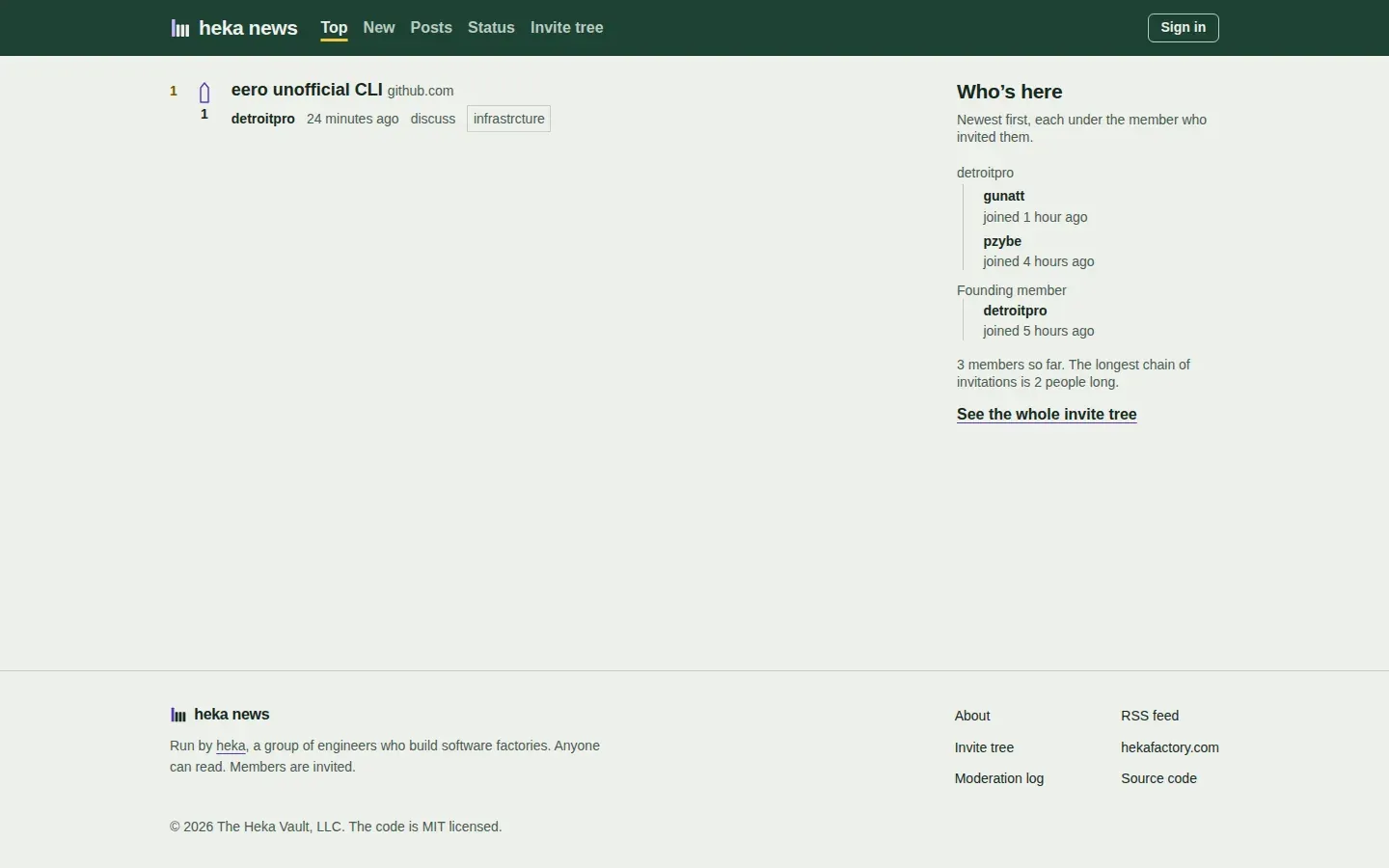
The heka news front page: the top links, and who’s here, each member under the person who invited them.

heka news

Live

Links and notes from engineers who build with agents

Links, long posts and short status notes from engineers who build software with coding agents. Anyone can read; members are invited, and the invite tree is public.

Ours, on our own servers.

How agents work on it

  • Agents build it. One check (types, lint, tests and a smoke run of every route) gates each pull request, with no secrets in CI.
  • Merging deploys it. Secrets come from Heka Vault at deploy time, never from a session.
  • In the product: the voice agent behind “Talk to us now”. Its key never leaves the server.

news.hekafactory.com

Client work

Factories we build and work in for clients, in their repositories.

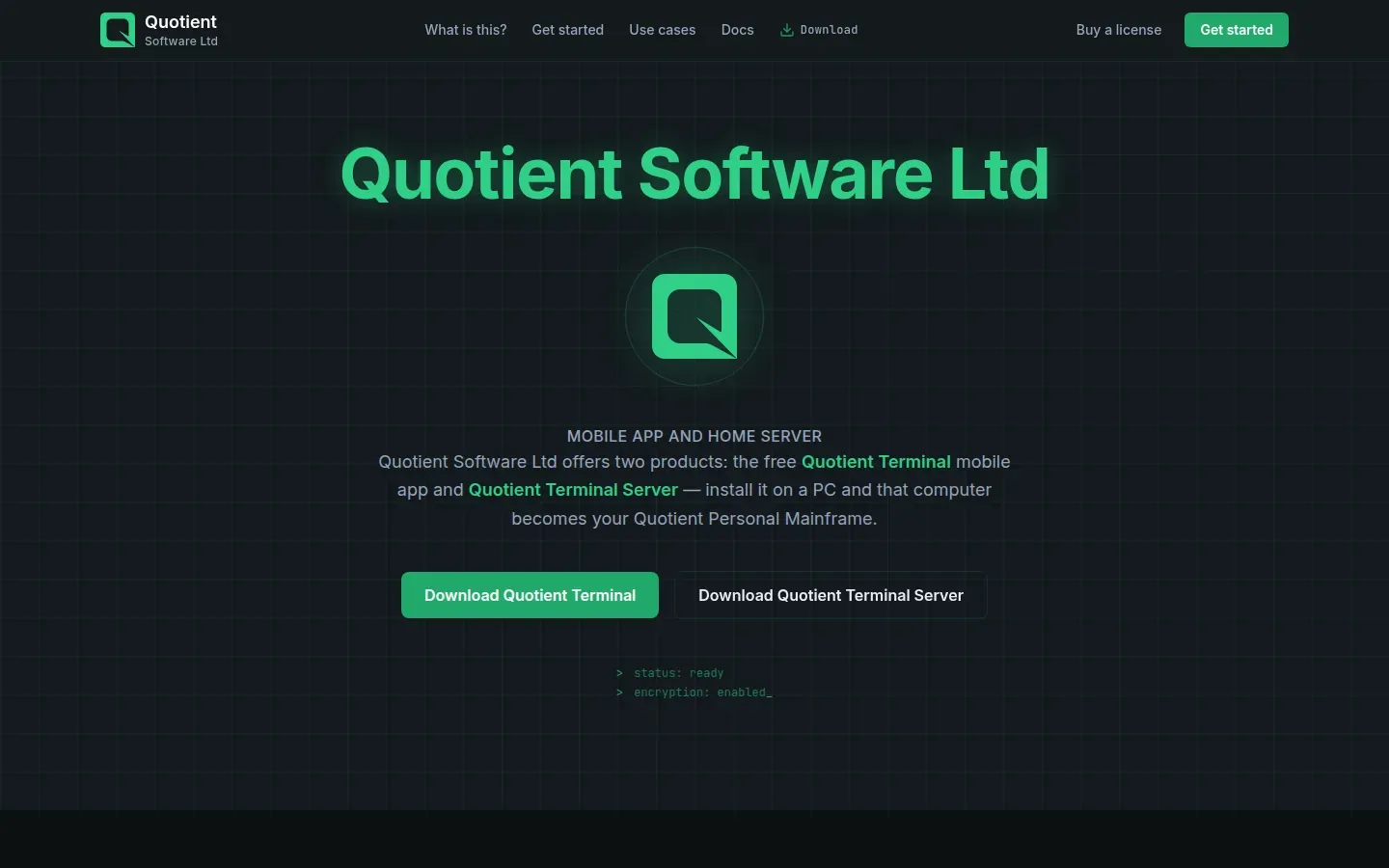
The Quotient Software home page: a mobile app and home server, with download buttons for Quotient Terminal and Quotient Terminal Server.

Quotient

Live Client work

A personal mainframe and its mobile app

The Quotient Personal Mainframe (“The Q”): install Quotient Terminal Server on a PC and it becomes your own server, reached from the free Quotient Terminal mobile app.

We work across the whole ecosystem: the API, the mobile app, the cloud service, the server tools and the website.

How agents work on it

  • Agents work across five repositories from one workspace, on one project board.
  • Agents open pull requests to the development branch only. Releases to test and production go through a scripted promotion.
  • Secrets come from Heka Vault.

quotientsoft.com

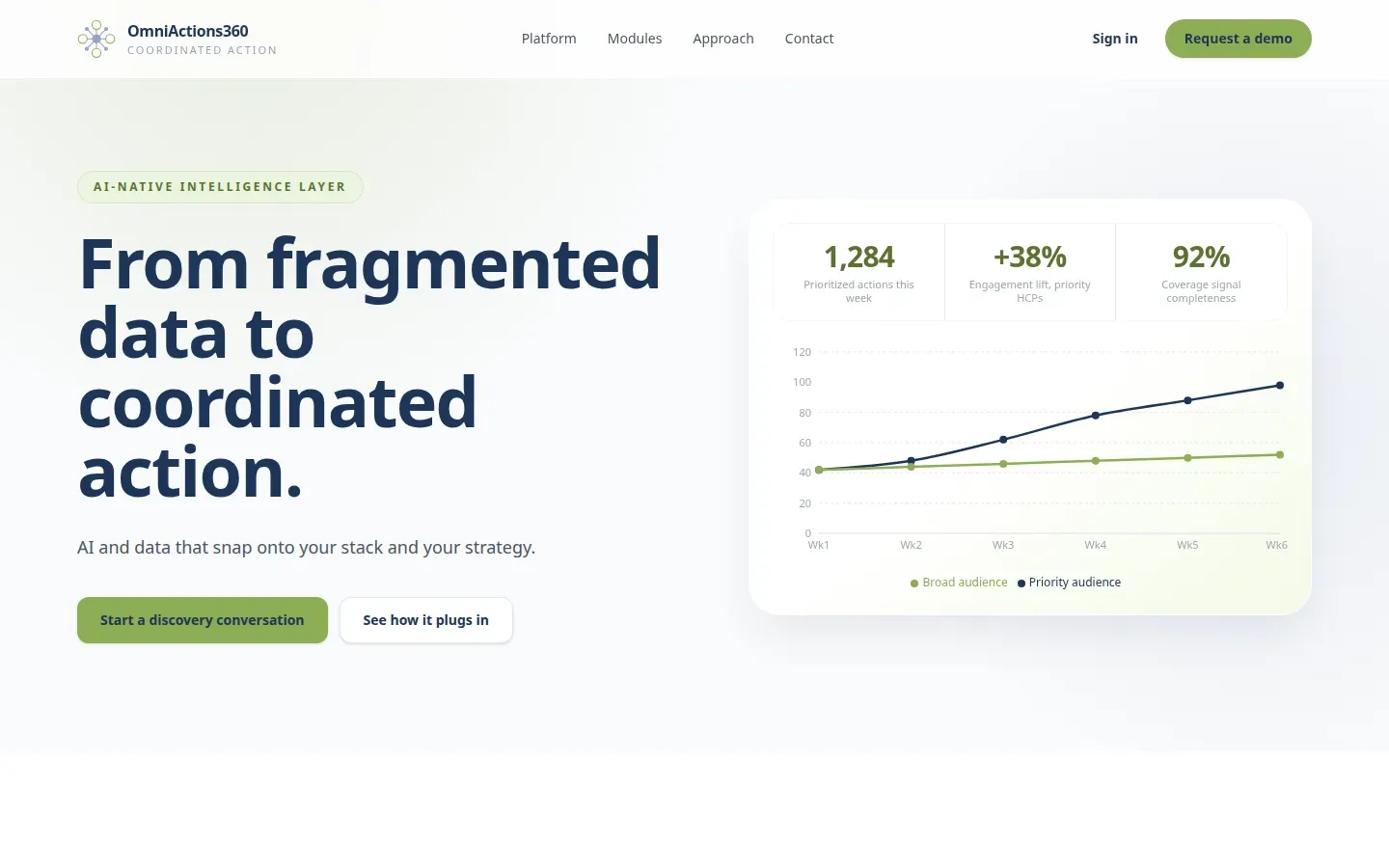
The OmniActions360 home page: “From fragmented data to coordinated action”, beside a sample dashboard.

OmniActions360

Live Client work

Coordinated action for life sciences teams

“From fragmented data to coordinated action.” An intelligence and orchestration layer for life sciences teams that connects signals across their systems and prioritizes what to act on.

We work in their core platform monorepo.

How agents work on it

  • Agents run the full check before pushing, and say which steps they could not run.
  • Unattended agent runs prefer no change over a weak one.
  • In the product: an AI analyst on Gemini in Vertex AI, scored against an eval baseline by an agent judge.

omniactions360.com

Tools our factory runs on

Built for our own agents first. Two are public on GitHub.

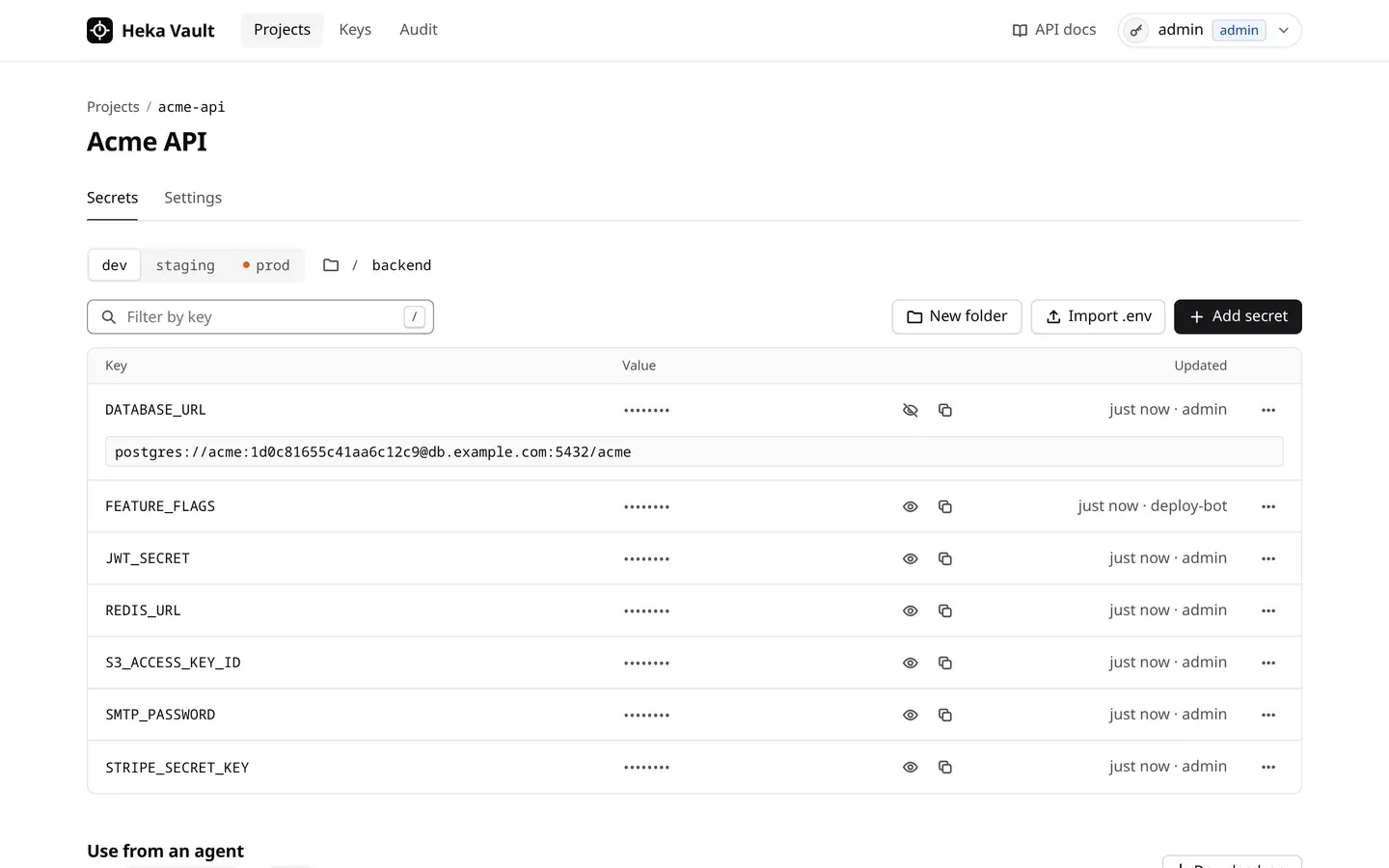
The Heka Vault web interface: a project’s secrets for one environment, values hidden but one, and the command an agent uses to fetch them.

Heka Vault

In daily use

Secrets for agents, out of context

The self-hosted secrets vault our agents and pipelines use. Each gets a key scoped to one project, so credentials stay out of every context window.

Ours. Public on GitHub.

How agents work on it

  • Built so agents can use secrets: each key is scoped to one project, to read or to read and write.
  • The audit log records every read and write, never a value.

github.com/heka-vault/vault

  • eeroctl

    In daily use

    A command-line tool for eero mesh routers. Our maintained fork adds what automation needs: the session token stays out of logs and output, DHCP reservations, and a --yes guard on destructive commands.

    How agents work on it

    • Agents never hold an eero session. A live check is a request to a person.
    • Every change comes with a test against a mock eero API. Live tests only read.
    github.com/heka-vault/eero
  • Discord agents

    In daily use

    The bots and scripts that keep the group in one place: repository, CI and app-build events land in each project’s channel, a morning summary goes out every day, and shipped work is posted to our community with client details removed.

    How agents work on it

    • Our coding agents read and post in each project’s channel through an MCP server.
    • CI and app-build results land in the project’s channel.

What should exist for you?

Bring us something you want built, or something painful you want gone. Talk to our agent now, or email us and an engineer answers.

A voice call with our AI agent.

Email us